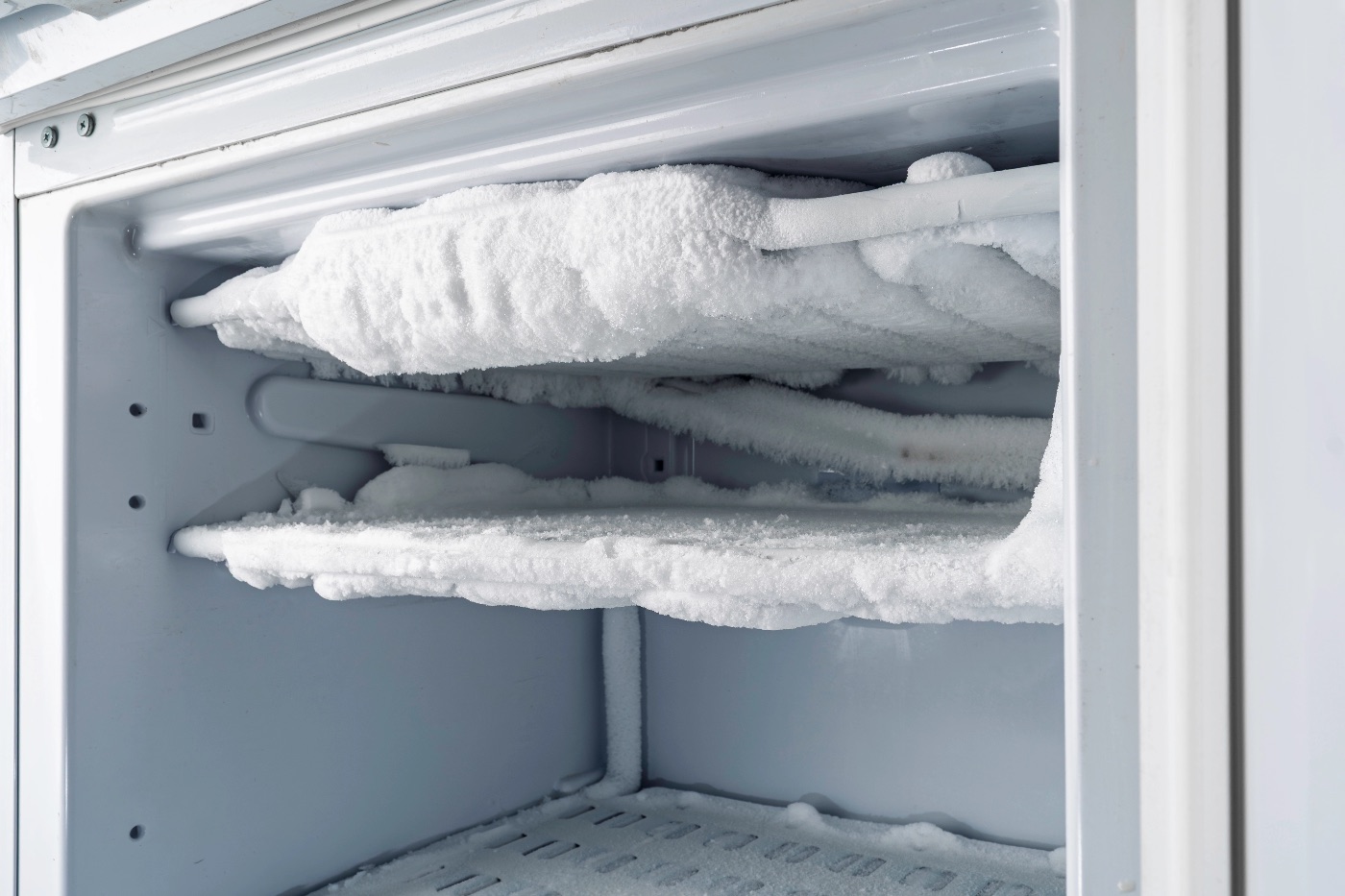
Ice buildup in a freezer is usually caused by warm, moist air getting inside or by a problem with the defrost cycle. The type of ice and where it forms point to the cause. Soft, snowy frost near the door usually means an air leak. Thick, solid ice on the floor usually means a blocked defrost drain. Heavy frost on the back wall often means a defrost system part has failed, and ice around the ice maker points to a water supply problem.
This guide helps you read each pattern, shows the safe checks and fixes to try first, and explains which problems need a technician. Matching the ice to its cause saves time, because clearing the ice alone rarely fixes the problem for long.
Frost vs Hard Ice: How to Read What You See
Frost and hard ice look similar at a glance, but they form in different ways. Frost is made of tiny ice crystals that build up when moist air touches cold surfaces. Hard ice is water that melted, moved, and then refroze in the wrong place.
That difference is useful. Frost points to moisture entering the freezer or a defrost cycle that is not clearing the coils. Hard ice points to meltwater that cannot drain. Location adds the second clue: near the door, on the floor, on the back wall, or around the ice maker.
Before you start, unplug the freezer or switch off its breaker if you plan to remove panels or handle parts. Never chip ice with a knife or screwdriver. Cooling lines sit close to the walls, and a puncture can ruin the appliance.
Snowy Frost Near the Door: Air Leaks and Gasket Problems
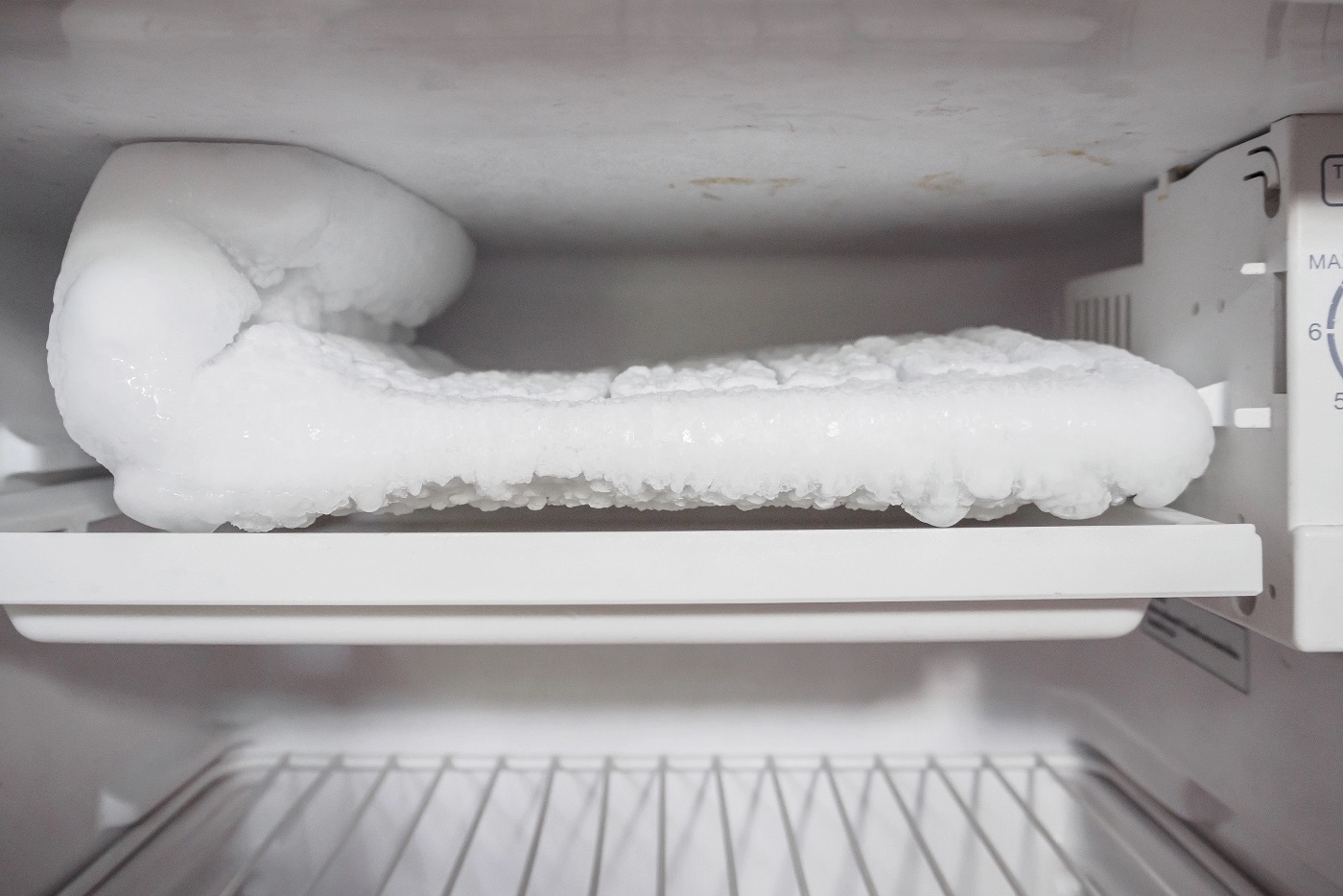
Powdery frost on food packages, shelves, and the area near the door is the classic sign of an air leak. Warm kitchen air slips past a weak seal, and its moisture freezes on contact.
The cause is often simple. A gasket may be cracked, dirty, or warped. The door may be misaligned from a sagging hinge, or a package or drawer may be keeping the door from closing fully. The fix depends on which of these you find.
How to Check the Door Seal
- Clean the gasket with warm soapy water, since grime can stop it from sealing
- Look for cracks, tears, or flat spots along the full seam
- Close the door on a sheet of paper and pull it out; little or no resistance suggests a weak seal
- Check that shelves, bins, and food are not sticking out
- Look for a door that sags or does not sit square
A cleaned or replaced gasket often stops this type of frost for good. If the door itself is out of line, a technician can adjust the hinges.
Thick Ice on the Floor: A Blocked Defrost Drain
A solid, clear sheet of ice on the freezer floor or under the drawers usually comes from the defrost drain. During each defrost cycle, melted frost is supposed to flow through a small drain into a pan below. If that drain freezes or clogs with debris, the water backs up and refreezes.
This is the key difference from frost. Frost comes from humid air. Floor ice comes from water that had nowhere to go. If you only scrape the ice away, the drain stays blocked and the ice returns.
How to Clear a Frozen Drain
- Unplug the freezer and remove food, shelves, and drawers
- Let the ice thaw, or use a hair dryer on low from a safe distance
- Find the drain opening, usually along the back wall or under the evaporator cover
- Flush it with warm water from a squeeze bottle or turkey baster until it drains freely
- Clean the drain pan and dry the freezer before restarting it
Use warm water, not boiling water, and avoid heat guns or sharp tools. If the drain keeps freezing, a defrost part may not be heating properly, which is a deeper issue.
Frost on the Back Wall: Defrost System Failure
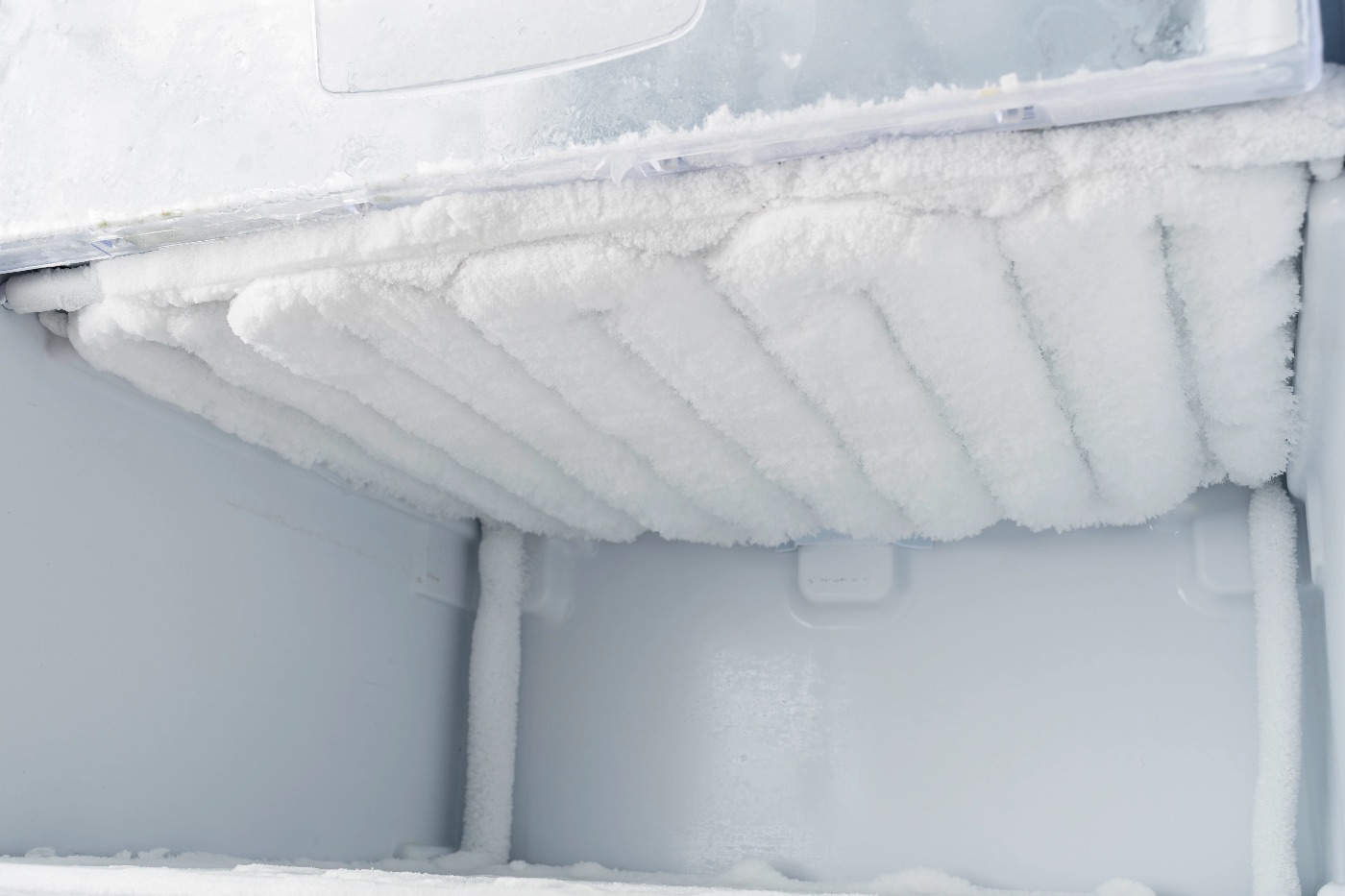
A frost-free freezer relies on a defrost system to melt frost off the evaporator coils. This system uses a defrost heater, a thermal fuse or thermostat, and a timer or control board. When any of these fails, frost keeps building until it covers the coils and blocks airflow.
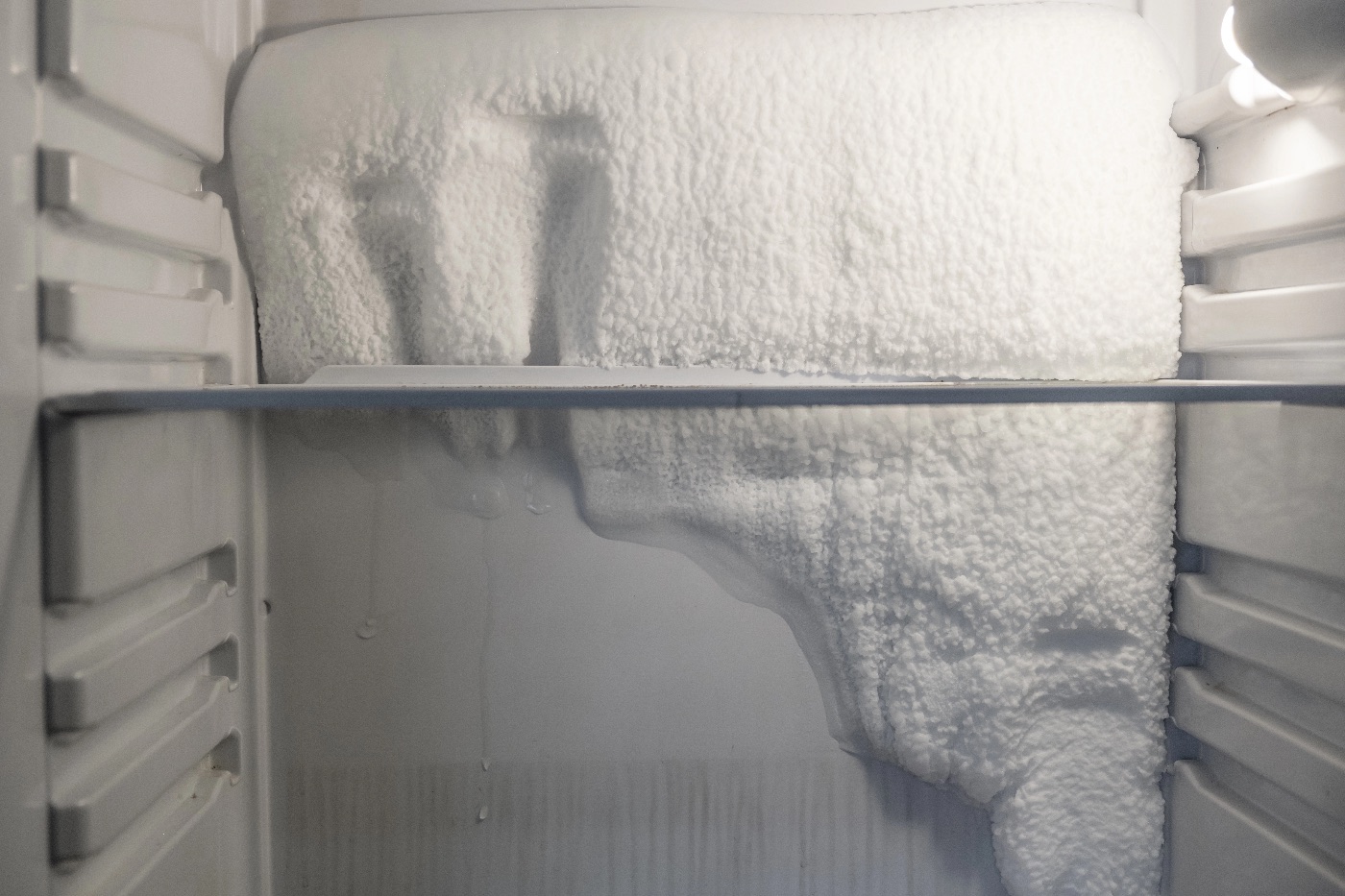
The result is often confusing. The freezer may stay cold for a while, but the fridge section warms up, because cold air can no longer circulate. Heavy frost on the rear wall, ice around the fan, or cooling that returns after a manual defrost and then fades are strong signs of this issue.
Defrost Parts a Technician Tests
- Defrost heater, which melts the frost
- Defrost thermal fuse, which can blow if the evaporator overheats or freezes
- Defrost timer or control board, which starts the cycle
- Temperature sensors, which tell the system when to defrost
Testing these parts requires a multimeter and access behind the rear panel. It is also easy to misdiagnose a control board when a simpler part is the real culprit, so a professional diagnosis saves money.
Ice Around the Ice Maker: Water Supply Problems
Ice concentrated near the ice maker usually has a different cause. A water inlet valve that does not shut off fully can drip slowly, and that small trickle freezes into a growing lump over time. A frozen fill cup, cracked mold, or incomplete harvest can cause the same result.
Check for ice jammed in the dispenser chute, since a chute door that stays open lets warm air in. If you see water spilling from the ice maker or ice forming right below it, the valve or fill system likely needs freezer repair. Turning off the ice maker may slow the buildup while you wait for service.
When to Call a Technician
Call for appliance repair in Cambridge if ice returns soon after you clear it, if the fridge side gets warm while the freezer stays cold, or if water leaks under the unit. Also call when you find heavy frost on the back wall, ice at the ice maker, or a drain that refreezes after you flush it.
These signs often mean a failed heater, fuse, sensor, or valve. A technician can test each part in order, replace only what has failed, and confirm that the defrost cycle runs properly afterward. Waiting too long can lead to food loss, water damage, and a bigger repair bill.
Choosing the Right Next Step
If a simple fix like cleaning the gasket or flushing the drain solves the problem, you are done. If the ice returns, the cause is deeper, and repair is the better choice than repeated defrosting. Ask the technician about the age of the unit and the cost of the repair, so you can compare fixing it with replacing it before you decide.
Tired of chipping ice that keeps coming back? Book your appliance repair with Common Appliance Repair today. Our technicians find the real cause of ice buildup in your freezer, whether it is a bad seal, a blocked drain, a failed defrost part, or a leaking valve, and fix it with the right parts.
Get an appointment to get your freezer working the way it should.