Samsung washer error codes show which system the control board flagged: water fill, drain, door lock, load balance, or an internal part. Codes like 4E, 4C, and nF mean the washer is not filling. Codes like 5E, 5C, and nd mean it is not draining. dE and dC point to the door, and UE or Ub mean an unbalanced load. Many can be cleared with a simple check, while motor, heater, and sensor codes usually need a technician.
This guide groups the common codes by family, explains what each means, and lists safe fixes to try first. Code names vary slightly by model, so check your manual if yours is not listed.
How to Read Samsung Washer Error Codes
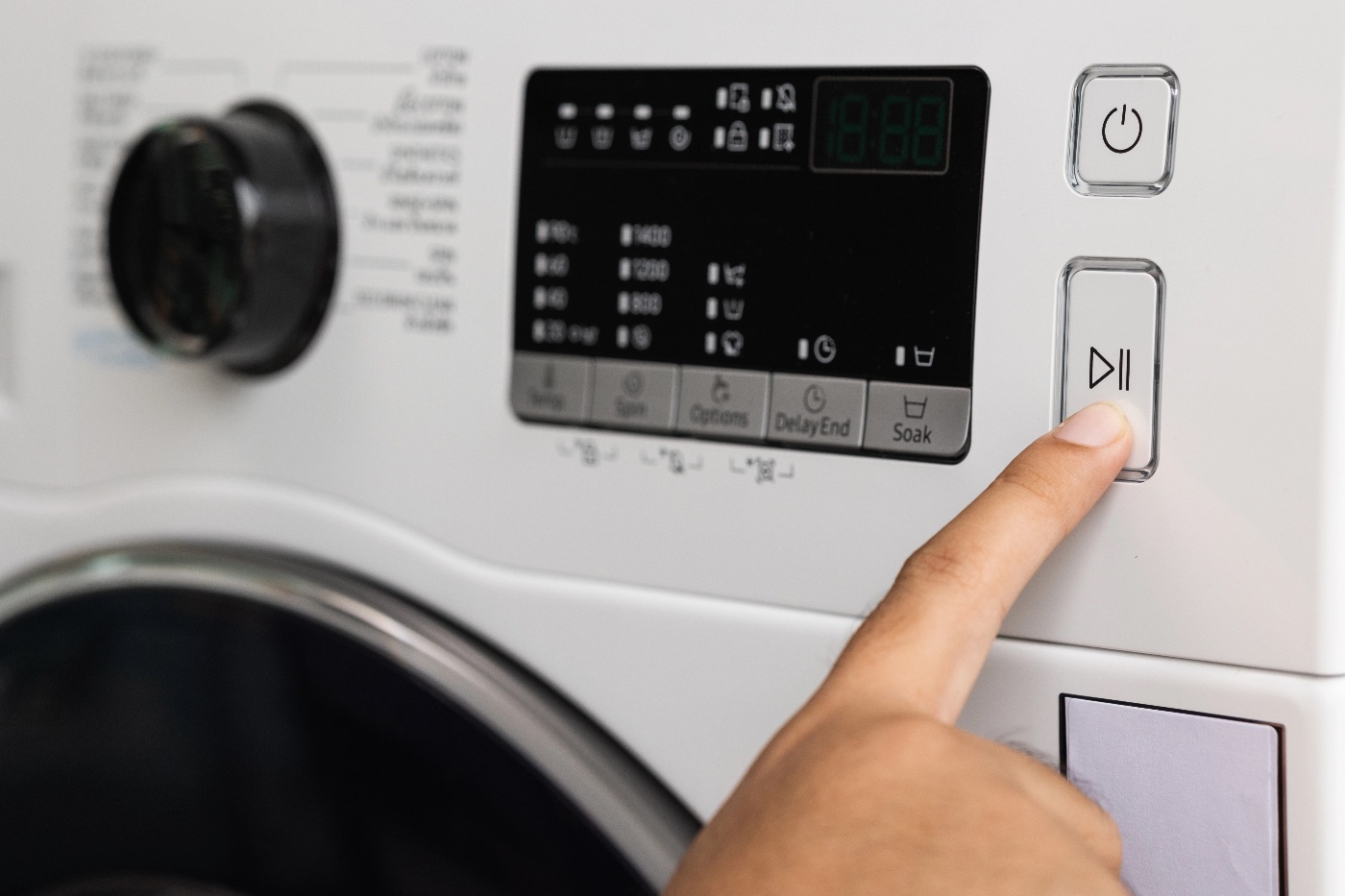
Models without a screen show the same information through blinking lights, so check your manual for the pattern.
Start with a reset. Unplug the washer, wait about three minutes, plug it back in, and run a cycle. If the code returns, use the section for that code family. Before touching hoses, filters, or panels, unplug the washer and turn off the water.
Water Fill Codes: 4E, 4C, nF, and Swapped Hoses
A 4E, 4C, or nF code means the washer did not get enough water. The usual causes are closed faucets, kinked hoses, frozen supply lines in winter, or clogged inlet screens.
How to Check a Fill Error
- Open the hot and cold faucets fully
- Straighten kinks in both hoses
- Turn off the water, disconnect the hoses, and clean the mesh screens at the inlets
- Unplug the washer for a minute and restart
If the code stays, the inlet valve may be failing. Debris can keep a valve from sealing, so a technician may replace it rather than a whole washer repair.
Codes such as 4E2, 4C2, and nF1 mean the hot and cold hoses are likely swapped. Reconnect each to its matching inlet, usually blue to cold and red to hot.
Drain and Overflow Codes: 5E, 5C, nd, and OE
A 5E, 5C, or nd code means water is not leaving the drum fast enough. The cause is usually a clog, not a broken part. Lint can collect at the drain hose end or in the pump filter, and a blocked household drain can back water up.
On front-load washers, the debris filter sits behind a small panel at the bottom front. Put a towel and shallow pan under it, since water will come out. Clear the filter, check the hose for kinks, and make sure the washer is level.
Overflow codes like OE and OC mean too much water is in the tub. Reduce the load and detergent, check the drain connection, and power cycle the washer. If water still stays in the drum, the drain pump may need replacement.

Water Level and Leak Codes: 1E, 1C, LE, and LC
These codes mean the washer detected a leak or is misreading the water level. Check hoses, valves, and the base for drips, and straighten twisted hoses.
Too much soap can fool the sensor. Run an empty cycle with little or no detergent until suds clear. If the code persists with no leak and no suds, the level sensor, its hose, or its connector may be at fault, and service is the next step.
Door and Lid Lock Codes: dE, dC, and More
Codes like dE, dE1, dC, dS, and LO mean the washer cannot confirm the door or lid is closed and locked, so it will not run.
Close the door firmly until it clicks, remove clothing caught in the seal, and clear lint from the latch. Look at the catch for cracks. If everything looks fine and the code returns, the door lock or switch may have failed. On some models, dC can also appear with an unbalanced load, so check the load first.
Unbalanced Load and Suds Codes: UE, Ub, and Sud
UE, Ub, and U6 mean the washer cannot spread the load evenly for washer spinning. Single bulky items like comforters are common causes. Pause the cycle, redistribute the laundry, and add a few towels if the load is small or lopsided. A Ur code just shows the washer is retrying the balance.
Sud and 5UD codes mean too much foam. They are not faults. The washer pauses so suds can settle, then continues. Use high-efficiency (HE) detergent and measure it carefully next time.
Codes That Usually Need Service
Some codes point to internal parts you cannot safely fix at home: motor (3E, 3C), heater (HC, HE), temperature sensor (tE, tC), vibration sensor (8E, 8C), and system or communication codes (AE, AC, SF).
A power reset is still worth trying, since a board glitch can set these codes. Note that 3E can mean a motor or a voltage problem depending on the model, and a washer should be plugged into its own outlet, not an extension cord. If a code like E2 or BE2 appears, press each control button firmly to free a jammed one. If the code returns, an appliance repair technician in Cambridge, MA should test the part before anything is replaced.
Fix It Yourself or Call a Technician
Water, drain, door, and balance codes are worth a quick try at home. The checks are free and often work.
Call for washer repair if the same code returns after a reset, if you see leaks, or if the code belongs to the motor, heater, sensor, or control board group. For an older washer with repeat problems, ask the technician to compare repair cost with replacement before you decide.
Get Your Samsung Washer Running Again Today
Stuck with an error code that will not go away? Book your Samsung washer repair with Common Appliance Repair today. Our technicians read the code, find the real cause, and fix it with the right parts.
Get an appointment to get your washer working again.