When a washer won't spin or leaves clothes soaking wet, the cause is usually an unbalanced load, a drainage block, or a failed part. Heavy loads and clogged drain filters are the easiest to fix at home. A faulty lid switch, worn belt, or bad motor part is less common and usually needs a technician.
This guide moves from the simplest checks to the parts that fail, so you can rule out free fixes first. You will also learn how to read the signs, what an error code may mean, and when washer repair is the smarter move.
How a Washer Decides to Spin
A washer spins only when four things are true: the load is balanced, the water has drained, the lid or door reports closed, and the motor can turn the drum. If any one fails, the washer slows, stops, or skips the spin.
That gives you a simple way to troubleshoot. Check balance first, then drainage, then the lid, and only then suspect the mechanical parts.
Rule Out the Simple Causes First
Many "broken" washers are really overloaded, unlevel, or set to the wrong cycle. An unbalanced drum makes the washer slow down to protect itself, and a delicate cycle spins too gently to remove water from a heavy load.
Free Checks Before You Call
- Spread clothes loosely and fill the drum about halfway
- Wash bulky items like bedding on a bulky or bedding cycle
- Select a higher spin speed, or run a Drain and Spin cycle
- Avoid pausing the cycle or adding items late during spin
- Check that the washer sits level front to back and side to side
If clothes come out wet only with big loads, the cause is likely balance, not a failed part. A power outage mid-cycle can also leave a load wet, so restart the spin if that happened.
Drain Problems That Leave Water in the Drum
If water remains in the drum, the washer may refuse to spin because it cannot finish draining. Lint, coins, and small items can clog the drain pump filter, the drain hose, or the utility drain it connects to.
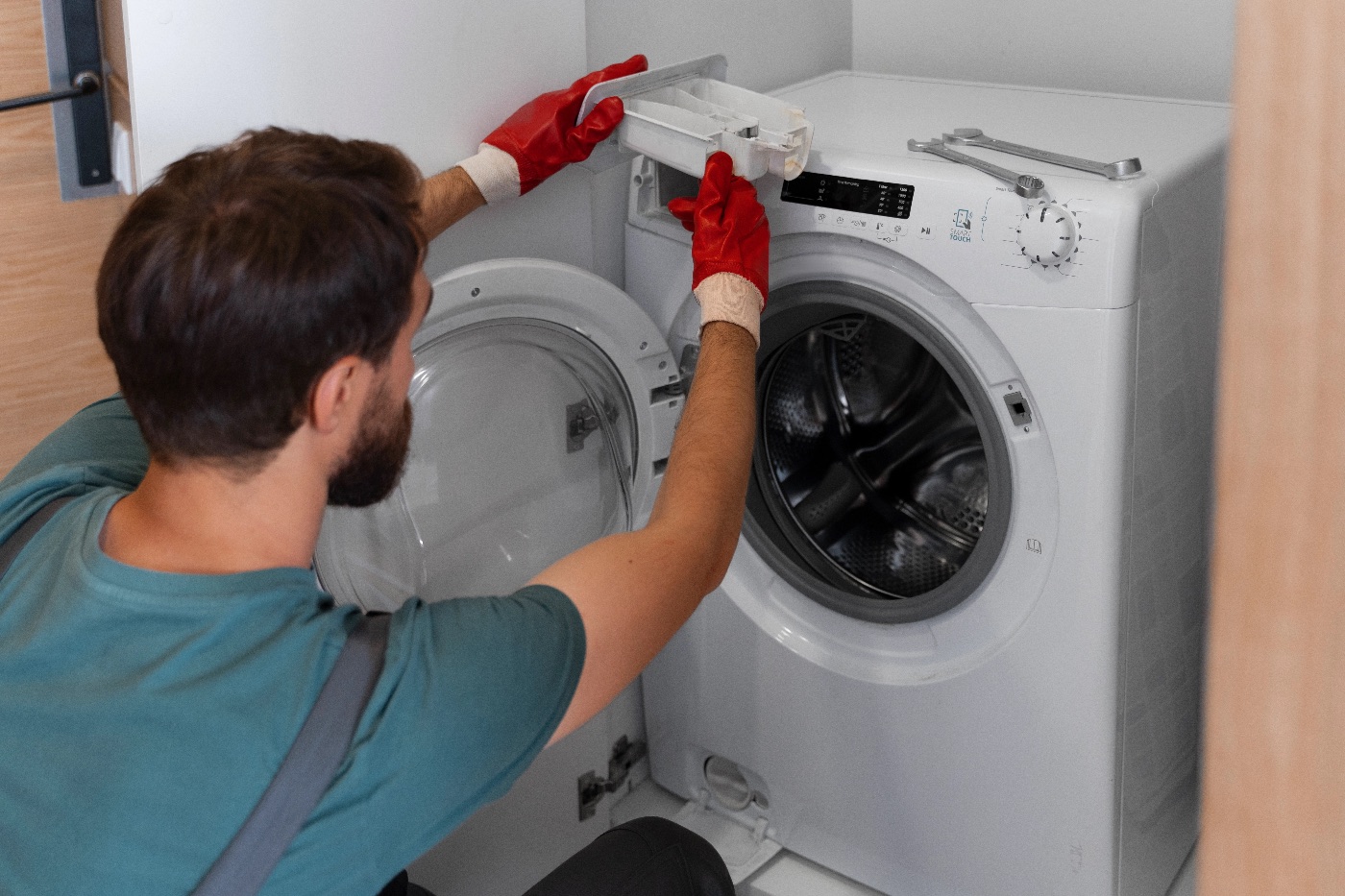
Unplug the washer first. On many front-load models, the filter sits behind a small panel at the bottom front, so put a towel and shallow pan down before opening it. Clear it, then check the drain hose for kinks. The hose should be secured firmly in the drainpipe, so confirm its height and depth against your manual. A slow household drain can mimic a washer fault, so test it with a bucket of water. If the washer drains well on its own but still will not spin, the problem is probably not the drain. If water sits in the drum even after the filter and hose are clear, the drain pump itself may have failed and that is a technician washer repair.
Lid Switch and Door Lock Failures
A lid switch or door lock tells the control board it is safe to spin. If it does not register a closed lid, the washer fills and agitates but refuses the high-speed spin.
Close the lid and listen for a click. Look for a cracked latch, a loose lid, or debris in the catch. A switch that fails to click, or a door that will not lock, usually needs replacement. This is a common repair, and it is inexpensive compared with other parts.
Worn Parts: Belt, Hub, Capacitor, and Motor
When balance, drain, and lid all check out, a worn part is likely. The symptom often points to the culprit.
What the Symptom Suggests
- Drum turns by hand but not under power: a loose or broken drive belt
- Agitator moves but the tub stays still: a stripped drive hub or worn coupler on some top-load models
- Humming with no movement: a weak start capacitor or a motor under strain
- No sound at all: a power, control board, or motor problem
- Part names and layouts vary by brand and model, so these are clues, not a diagnosis.
Belts, couplers, and capacitors sit behind panels and carry electrical risk. Unplug the washer before looking, and leave testing to a technician. Guessing and replacing parts often costs more than a proper diagnosis.
Washer Error Codes and Samsung Washer Repair
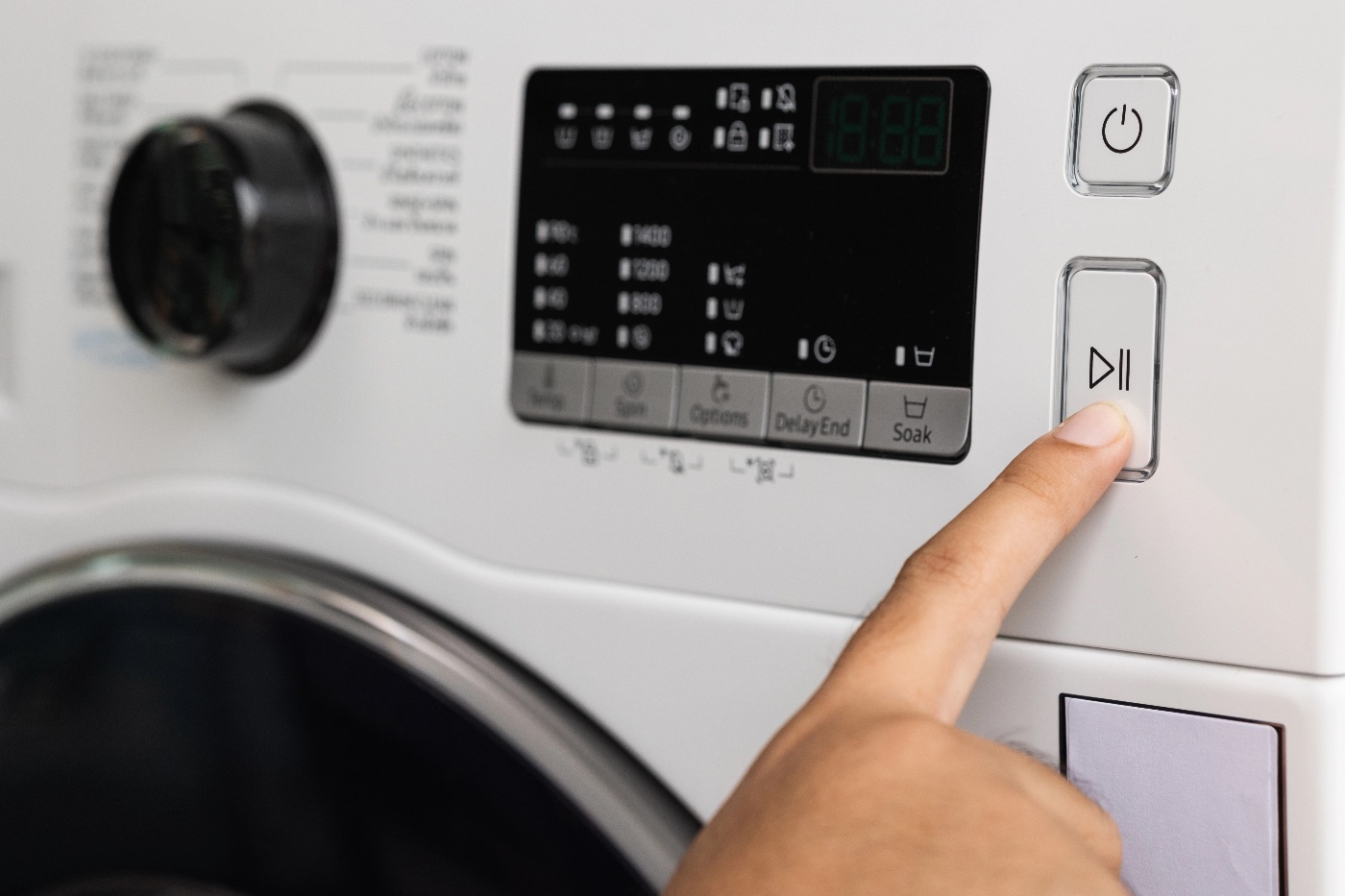
Many modern washers display a washer error code when something blocks the spin. Common families include drain, door, and unbalanced load codes. On Samsung models, codes like 5E or nd point to draining, dE to the door, and UE to an unbalanced load.
Start with a power reset: unplug the washer for about three minutes, plug it back in, and run a drain and spin. If the same code returns, note it before you call. Samsung washer repair is faster when the technician already knows the code and model, since it narrows the list of suspect parts. Motor, sensor, and control codes generally need service. Codes vary by model, so confirm the meaning in your manual before you act on a chart you find online. A code that appears only with large loads often points to balance, not a broken part.
Appliance Repair in Cambridge
If the simple checks fail, a professional can find the real cause in one visit. Appliance repair in Cambridge covers washers, dryers, refrigerators, ovens, and dishwashers, and same-day appliance repair is often available when you call early.
A technician will test the lid switch, drain pump, belt, motor, and control board in order, instead of swapping parts by guesswork. Tell them your brand, model, symptoms, and any code when you book. That detail helps them bring the right parts and finish faster.
Repair or Replace: Making the Call
Most spin problems are repairable. A lid switch, belt, or drain issue costs far less than a new washer, so repair makes sense on a newer machine.
Replacement becomes worth considering on an older washer with repeat problems, or when the repair cost approaches the price of a comparable new unit. Ask the technician about age, the cost of the fix, and the chance of future failures. In the meantime, do not put soaking clothes straight into the dryer. Press out extra water or run another spin first.
Get Your Washer Spinning Again Today
Washer won't spin and a wet pile of laundry waiting? Book your washer repair in Cambridge with Common Appliance Repair today. Our technicians find the real cause, fix it with the right parts, and offer same-day appliance repair when schedules allow.
Book an appointment online to get back to dry, clean clothes.